
As the cannabis industry starts proactively managing accounts receivable, KPIs like Days Sales Outstanding (DSO) deserve a closer look. But looking at DSO alone is like accepting the score of a hockey game you just played without watching the game film, win or lose.
DSO can move for reasons that have nothing to do with how well you are collecting your AR. A jump in sales, a seasonal swing, or a shift in how customers pay can all push the number around. Look at DSO in isolation and it is easy to reward or blame those managing credit for something the calendar did.
The fix is not to abandon DSO as a metric. It is to surround it with others.
A few others that add the context DSO misses:
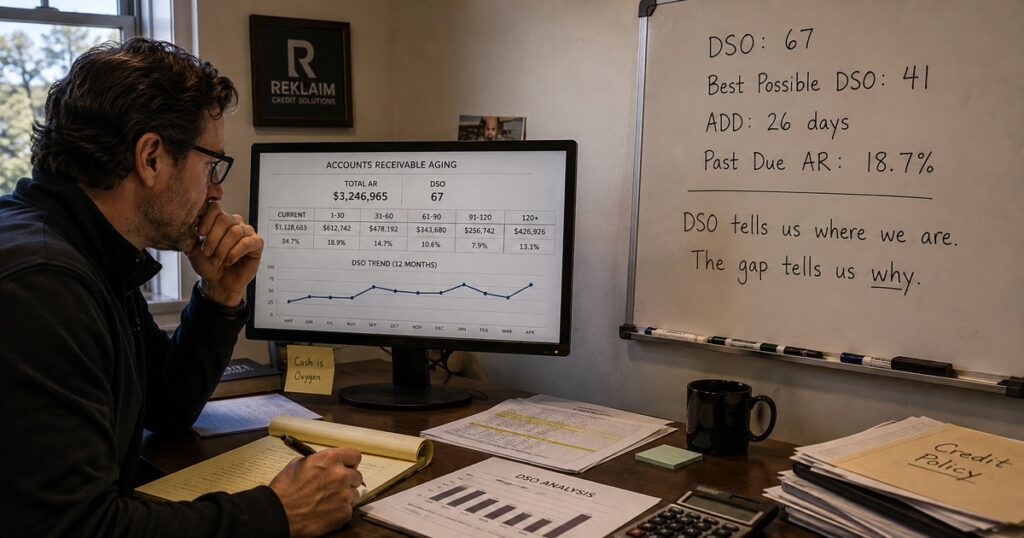
- Best Possible DSO: what collections would look like if every customer paid exactly on terms. The gap between actual DSO and BPDSO is the main story.
- Average Days Delinquent: DSO minus Best Possible DSO. This isolates how late customers pay,separate from the terms they were handed.
- Collection Effectiveness Index: how much of what was collectible got collected. Many teams managing AR treat this as the truest read on collection efficiency, since it does not get distorted by sales volume.
- Percent of AR Past Due: the share of the portfolio sitting beyond credit terms. A rising number is an early signal of customer stress, not just a collections issue.
- Bad Debt Ratio: what gets written off as uncollectible against sales. Here is a cannabis specific edge: some of the bigger operators are public and file with the SEC, so their bad debt numbers are right there in the filings. Trending up, it points to underwriting, risk appetite, or process.
None of these matters unless it changes a decision on how you manage your customer.
The point of these metrics is to get in front of risk while there is still time to act. Tighten credit terms, adjust a credit limit, restructure a payment plan, or bring in help from a 3rd party collection agency before the customer becomes a write-off.
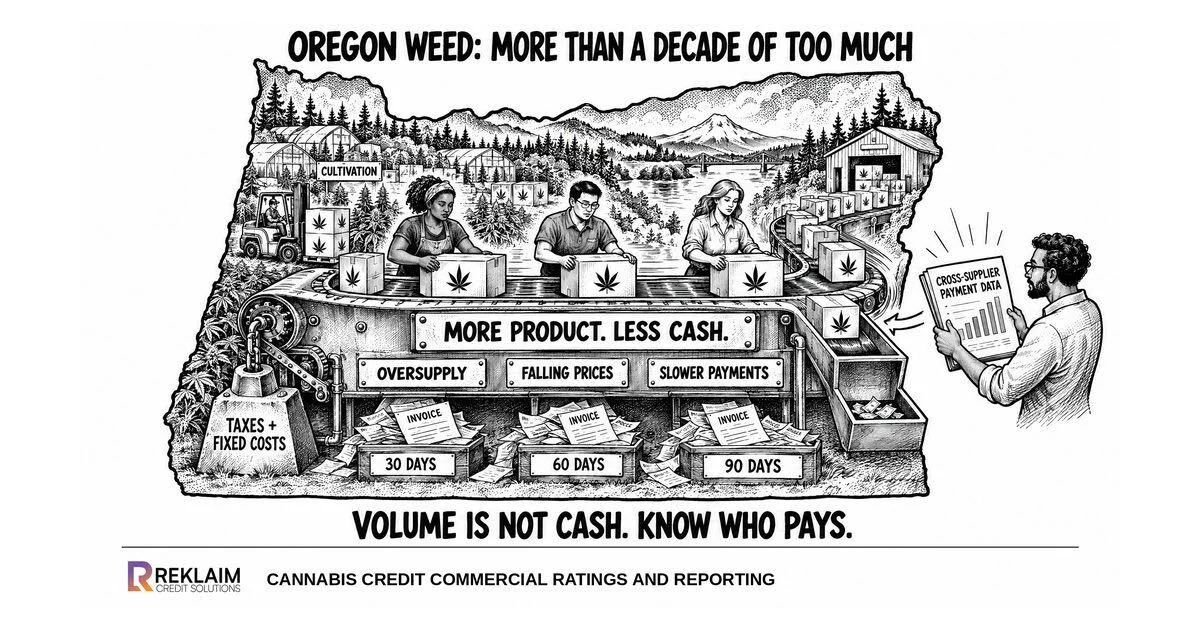
In cannabis, credit terms run longer, cash is tighter, and Whitney Economics has pegged unpaid receivables at more than $4 billion, with roughly a fifth of industry revenue tied up in overdue payments.
COD might have been great, and it keeps cash rolling in, but it caps growth. Extending credit fuels growth, but your exposure can build quietly and eventually be devastating if not managed.
You have been managing real complexity for years. What you have not had is the shared payment data and portfolio monitoring other industries have leaned on for decades.
Every metric above is only as sharp as the payment data behind it, and most of these metrics only see your own AR. Reklaim Credit Solutions is being built around de-identified, contributed payment and AR data that is cannabis specific, so this industry can get predictive risk analysis from neural network ensemble models that measure how companies actually pay, not just how they pay you.
Know who won’t pay before they don’t pay.