

If you run credit and accounts receivable at a cannabis operator, you already know your aging report only answers one question. Who is late.
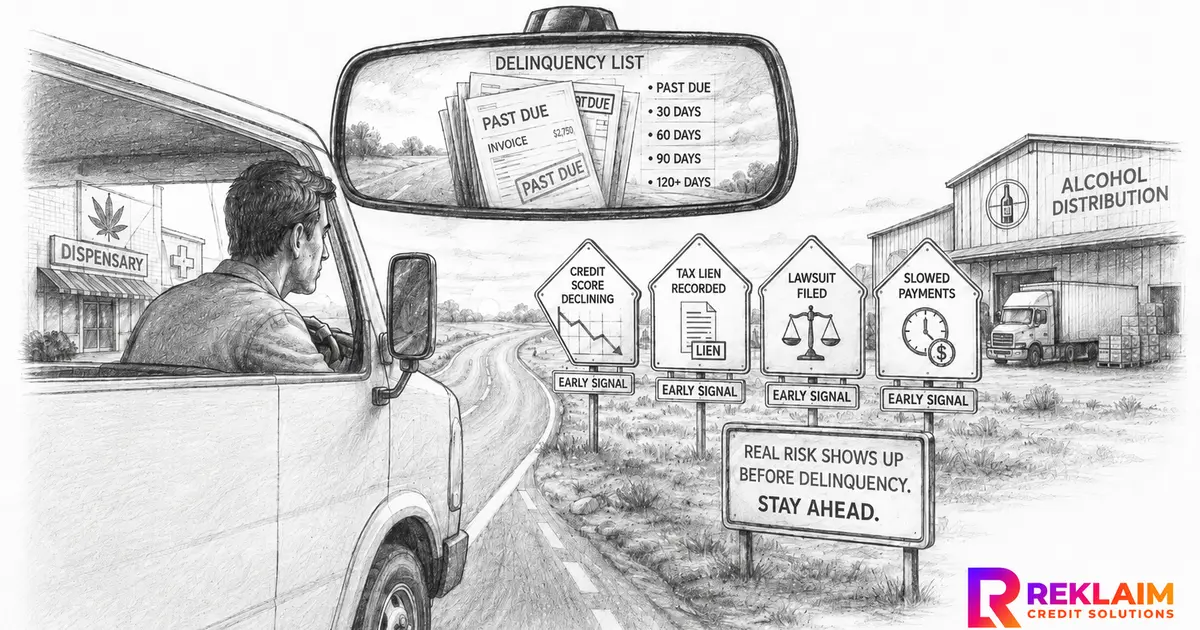
It will never tell you who is about to become a problem.
I have watched this play out hundreds of times across three-plus decades in B2B credit and collections, working alongside some of the largest order-to-cash departments in the country.
This all started with a comment I made last week on a post about using risk to manage accounts receivable, and it is worth expanding on.
The aging report does not tell you who has the highest risk of non-payment. It does not tell you who has the highest dollars at risk.
It does not tell you who is about to stop paying. And it does not tell you which customer needs a call today and which one just needs a little patience.
In cannabis, that gap gets expensive fast.
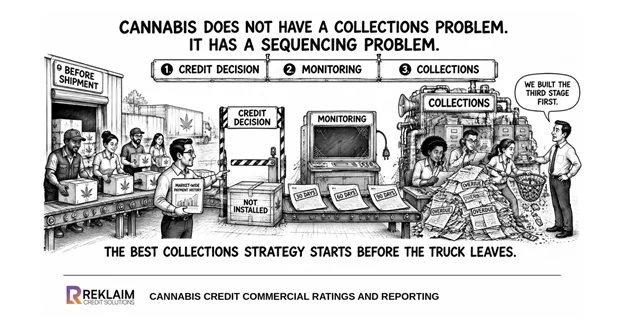
You shipped products on net 30 because the industry pushed you off COD. Now you have a stack of open invoices and a list sorted by who owes the most money for the longest period. So, you work that list from top to bottom. Oldest and most dollars owed first.
Here is the shift the best credit teams make.
You are prioritizing by age when you should be prioritizing dollars at risk.
Picture two past-due customers. One is 120 days and owes you $50k, but has paid you on time for over a year and just hit a slow month. The other is 90 days and owes you only $30k, but their payment velocity is slipping across the network, so their credit score is sliding. On top of that, a federal tax lien just hit for $50k, and a flag just hit their license status, two more red flags sitting right there in their credit report.
Work the list oldest past due first, and you spend Monday chasing the one who was always going to pay, while the one who is on the brink of default (because the IRS doesn’t wait), who owes you less money for a shorter period of time, gets another two weeks of runway.
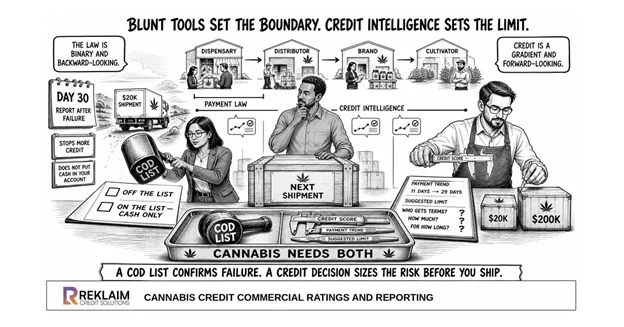
Customer A owes you more. Customer B is far more likely to default. Dollars at risk is the probability of default, which is what the credit score is built to predict, multiplied by the balance, and once you run it, Customer B is the bigger hole even at the smaller number.
The same risk lens does double duty. On the front end, it tells you who to extend terms to before the product ever leaves your dock. On the back end, it tells you which past-due customer should have the highest priority in your collections, while there is still something to collect.
The customer to call today is not the one who is aged out the furthest. It’s the one with the most dollars at risk.
Aging tells you what already happened. The score and dollars at risk tell you what’s about to.
Your aging report is a history book. You need a credit score that tells you what is coming, long before the aging catches your attention.
This is what we are building at Reklaim Credit Solutions.