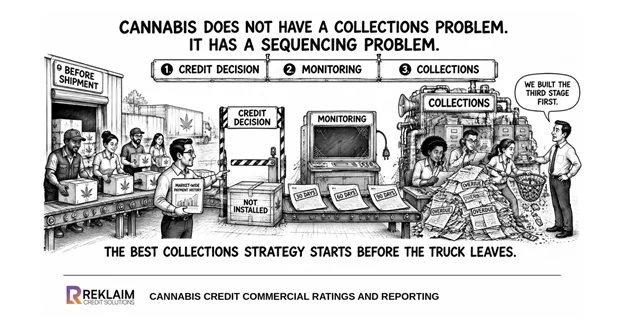

Every time a cannabis company ships product on Net 30 or Net 60, two decisions get made. The sales decision and the credit decision.
The sales decision gets the celebration dinner. The credit decision usually gets a desk in the back office, viewed as an expense rather than a revenue generator. Anyone who has worked in credit knows the drill.
But once the truck leaves the warehouse, that inventory becomes a receivable. Whether it gets paid on time, paid at all, or joins the write-off column depends on the quality of the credit decision and the financial condition of the customer.
After decades around thousands of B2B credit and collection departments, one lesson keeps showing up: it all starts with the credit decision. Here’s how a credit report earns its keep.
Start with the credit score.
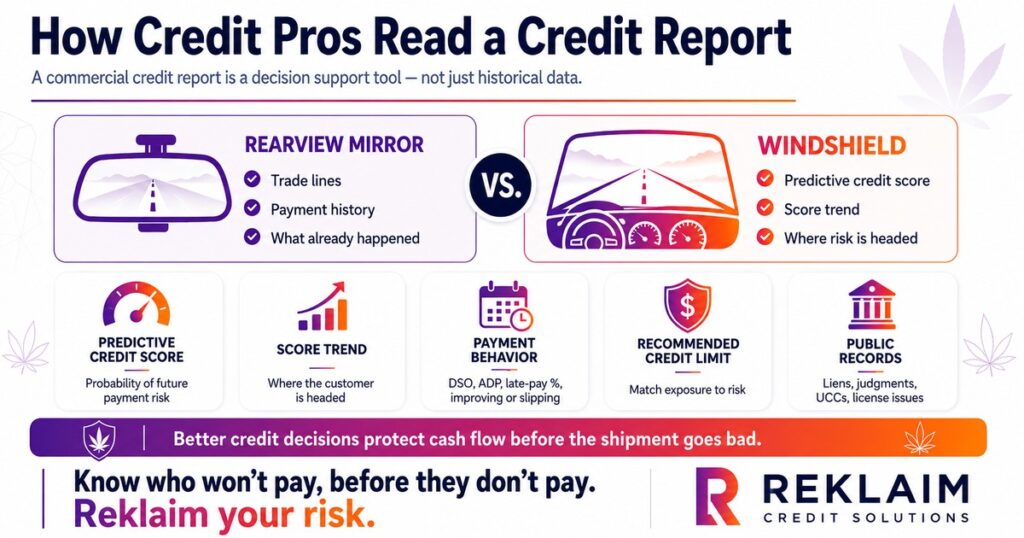
A predictive credit score measures the probability of future payment risk, estimating whether a customer’s risk is improving or deteriorating. It’s a critical input. It’s not the whole answer.
Then look at the trend.
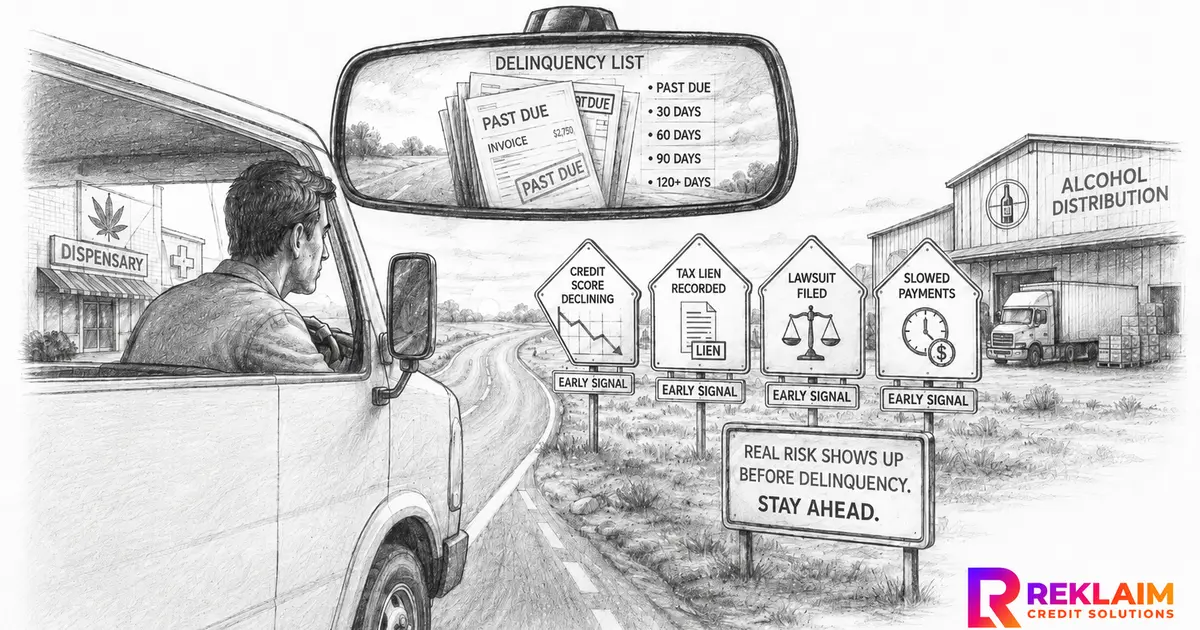
Today’s score shows where a customer stands. The trend shows where they’re headed. Declining trends often appear months before a customer becomes seriously delinquent.
Then payment behavior.
DSO, ADP, percentage of invoices paid late, and whether performance is improving or slipping. “The check is in the mail” is a data point too. Just not a good one.
The rearview mirror and the windshield.
Trade lines and payment history are extremely valuable, but they show what has already happened. That’s the rearview mirror.
A predictive credit score estimates where risk is headed. That’s the windshield.
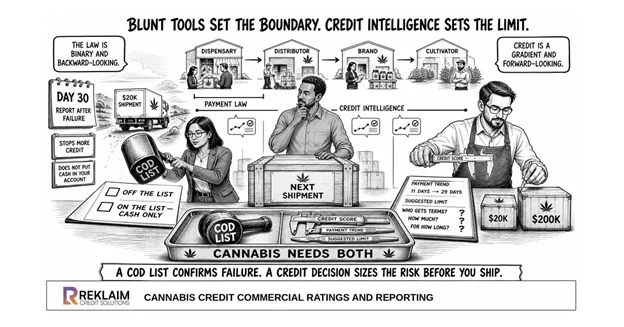
Together they answer what matters most: Should exposure be reduced? Terms shortened? The next shipment held? Strong credit decisions use both.
Recommended credit limits.
Not every customer should receive the same amount of trade credit. A recommended limit matches exposure to risk and takes emotion out of the number. Sales may still override it. Sales always might. But a number backed by data holds up a lot better in the postmortem than a number backed by a feeling.
Public records.
Tax liens, judgments, UCC filings, and license issues often signal financial stress before it shows up in payment behavior. A new customer requesting terms with a tax lien already on record is worth knowing before the first shipment, not after.
A commercial credit report isn’t a stack of historical data. It’s a decision support tool. Extend terms? How much exposure? Keep shipping, or hold?
One prevented bad shipment can pay for credit reporting many times over. The value isn’t the report. It’s the order that never went out.
That’s the visibility Reklaim Credit Solutions is working to bring to cannabis credit decisions.