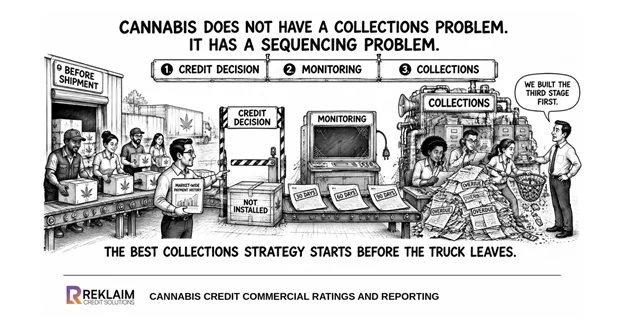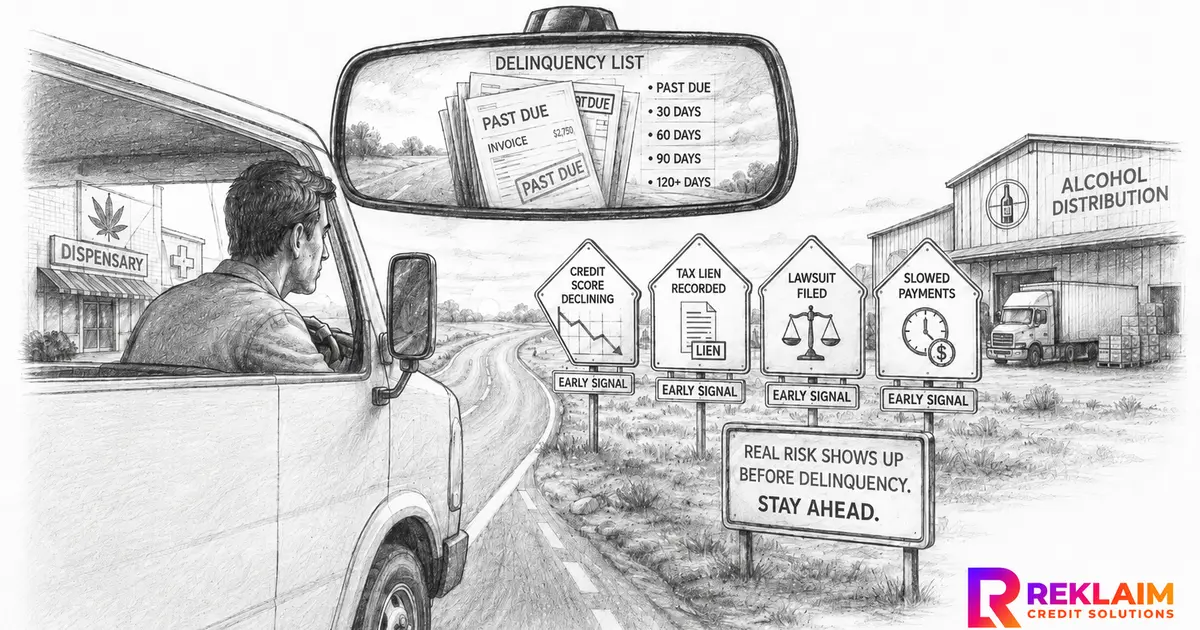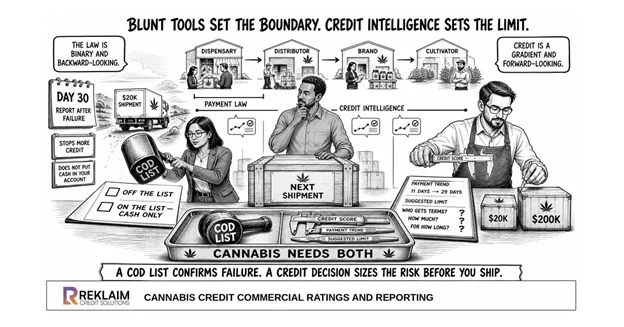


This question has been coming up frequently.
Here is a short explainer:
Credit association
A credit association is a member-driven organization where businesses in the same industry pool their AR data and share payment experience about common customers.
Members contribute ledger data and access the group’s payment history on shared debtors.
Associations meet face-to-face, networking than can have real value.
Those meetings should operate under a strict legal constraint. Members can only discuss what they have done in the past. They cannot share what they intend to do in the future.
Disclosing forward-looking credit decisions to competitors crosses into anti-trade law territory. That is why a lawyer is typically present while discussions take place. If they are not, watch out!
Hearing what peers have experienced with a mutual customer can be very useful, but no real analysis is being performed. Any decision that follows is 100% JUDGMENTAL.
It is based on the instincts of the person in the room, not a statistically validated model.
Some associations apply algorithms to their pooled data to generate a creditworthiness score. This improves on raw payment history, but the structural limitation remains. And, do you know what those “algorithms” measure?
The model is only as good as the data fed into it, and that data comes exclusively from the member pool. A counterparty’s behavior with non-members, their broader financial condition, and risk factors outside the contributed dataset are invisible to the model.
The “score” reflects consensus experience within the group, not an independent evaluation.
Credit rating agency
A credit rating agency independently evaluates the creditworthiness of a business and issues a standardized rating or score. The agency gathers data, applies analytical models, and produces an objective assessment of how likely a counterparty is to meet its financial obligations.
Prediction!
Moody’s, S&P, and Fitch operate at the capital markets level. Reklaim Credit Solutions, Dun & Bradstreet, and Experian operate at the commercial trade credit level.
In either case, the rating serves the party extending credit, not the party being rated. The methodology is proprietary, the output is consistent, and the rating stands as a standalone decision-making tool.
The core difference
A credit association aggregates what its members already know. THE PAST.
A credit rating agency produces independent analysis that no single member could generate on their own. THE FUTURE.
One is a data-sharing cooperative with legal guardrails and judgmental outputs.
The other is an analytical service with statistically validated predictive scores.
Both have value, but for industries where participation is thin, data is siloed, or the market lacks transparency, a credit association cannot fill the gap that a purpose-built rating agency can.
So, we set out to build it!