
NY’s Cannabis Credit Rules Are Clear. But…
NY has built one of the most structured trade credit frameworks in cannabis. But everyone operating in NY needs to understand exactly what it requires, and what it CAN’T do for you.
Under NY regulations, distributors must offer the same product at the same price to EVERY dispensary. No exceptions. No favoritism.
The only concessions permitted to incentivize prompt payment is a discount “not exceeding 1% for payment received within 10 days of shipment. Volume discounts have to be offered to all “fairly.”
On paper, that’s it.
The rule mirrors the alcohol industry, designed to deliberately keep the playing field level for small and mid-sized operators across the supply chain.
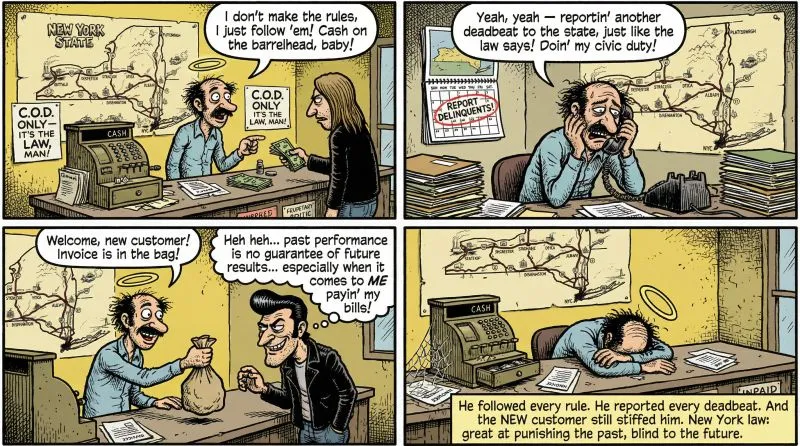
If you extend credit and don’t get paid, reporting the delinquency isn’t optional. Under NY regs, licensed suppliers are supposed to report any retailer who fails to pay within 30 days to the NY OCM, and should do so within 7 calendar days of the payment due date.
The OCM then places that retailer on its public C.O.D. list. Once listed, no supplier in New York is supposed to extend that retailer credit. COD until all reported debts are cleared.
Here’s the catch. “Anecdotally”, most NY cannabis operators aren’t reporting delinquent payers at all and discounts are being handed out like Halloween candy. The law is on the books, the obligation is clear, and the enforcement mechanism exists, but the COD list only can only work if suppliers actually use it.
If suppliers stay silent on slow-pay or no-pay accounts, the rest of the market keeps shipping product to those same retailers, unaware of the risk.
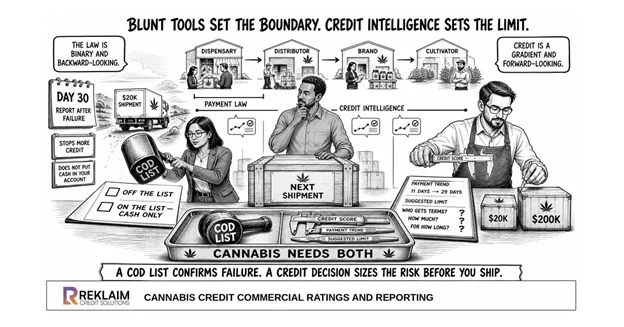
Because the OCM’s COD list, as valuable as it is, is associative data, not predictive data, you still need a 3rd party credit agency.
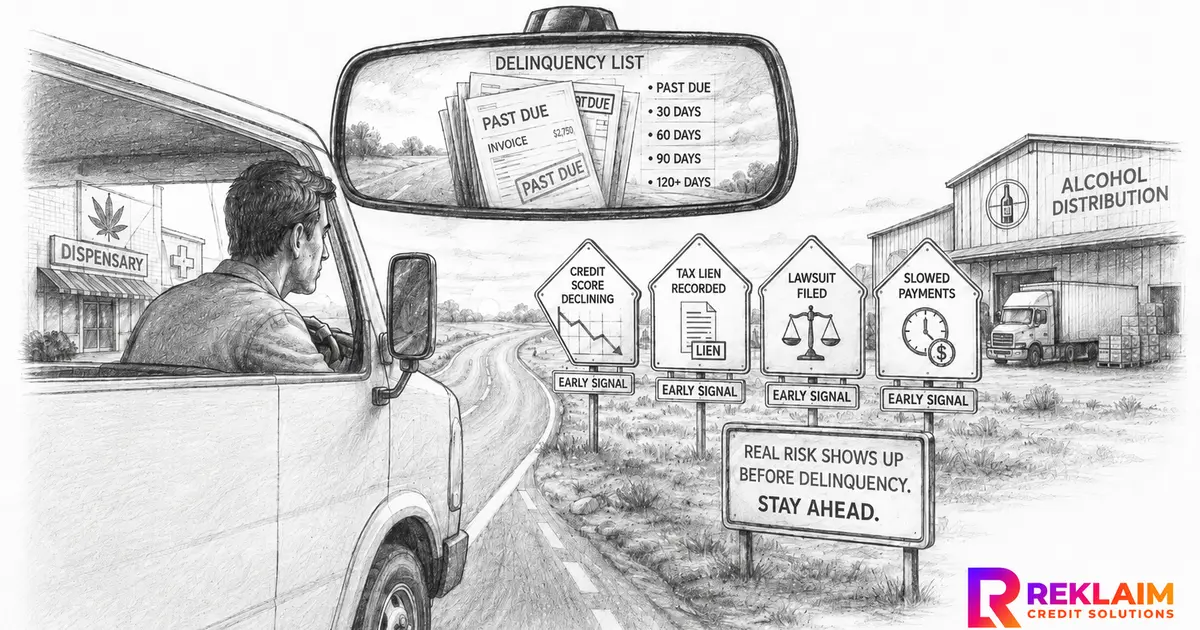
The law might tell you who currently owes money but it can’t tell you whether a trade partner has a history of stretching terms, whether their payment behavior has been deteriorating over time, or how they look across the broader commercial credit universe.
It’s not predictive and won’t help you prevent mistakes before they happen.
3rd party commercial credit agencies aggregate trade lines, payment history, public records, and financial behaviors across industries and time.
They build profiles that go far beyond a binary “on the list / off the list” snapshot.
Put plainly:
The OCM COD list is a compliance tool.
A third-party commercial credit file is a business intelligence tool.
Big difference. You need both.
As the NY cannabis market matures and more trade data accumulates, the predictive power of commercial credit reporting will only grow.
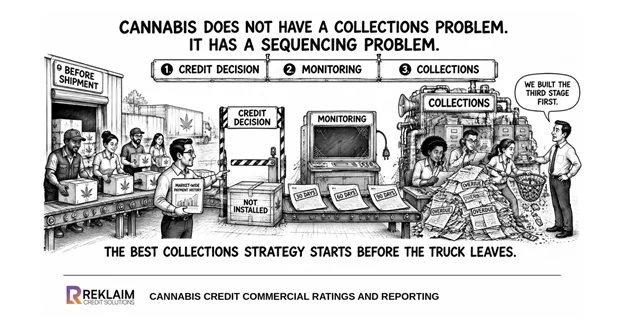
The suppliers and distributors who build credit discipline now, extending credit thoughtfully, reporting promptly as required, and checking bureau data before shipping product, will have a structural advantage.
The framework is in place.
The obligation is clear.
The smarter operators will use every tool available.
Reklaim Credit Solutions can help!