
Cannabis suppliers in Massachusetts have been given an additional resource in order to tackle those clients who are unable to clear their dues.
Starting January 1, 2028, Massachusetts cannabis businesses that default on trade obligations within a span of 60 days will be classified as delinquent in accordance with the provisions of Massachusetts General Laws Chapter 94G, Section 23, and will be ineligible to procure any cannabis product under credit terms. This will be done after the Cannabis Control Commission verifies their delinquency and includes them in the delinquent business list.
For suppliers that have spent years dealing with slow-paying accounts, that is meaningful protection.
However, it does not solve the underlying issue of the credit problem.
By the time a customer reaches 60 days without paying, the supplier has already extended the credit. The original invoice is already aging, additional orders may have shipped, and the supplier’s total exposure may be much larger than it was when the account was approved.
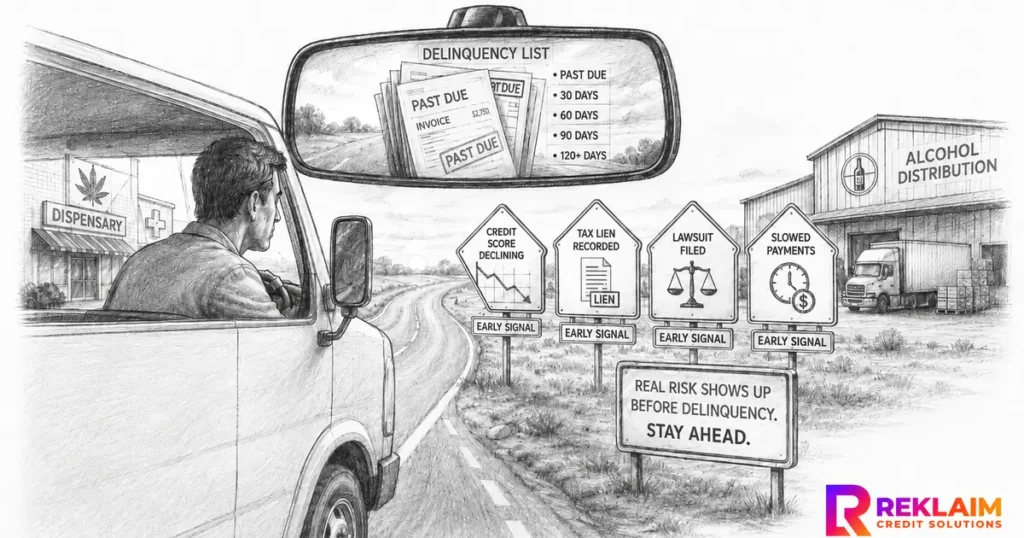
A delinquency list tells you when a problem has crossed a statutory line.
Good credit management tries to identify the problem before it gets there.
What Is the Massachusetts Cannabis Delinquent List?
Massachusetts added the delinquency provisions as part of its 2026 cannabis law reforms. The new credit rules take effect January 1, 2028.
The law applies to covered credit extended for marijuana or marijuana products between licensed cannabis businesses. It does not require suppliers to offer credit. When they choose to extend credit, however, the credit period cannot exceed 60 days.
In the table below, I have shown how the process works:
| Stage | What Happens |
| Credit is extended | A licensed business buys marijuana or marijuana products on trade credit. |
| 60 days pass without full payment | The unpaid debt becomes overdue and the buyer becomes delinquent under the statute. |
| Supplier reports the delinquency | The licensee that extended credit has no more than three days to notify the Cannabis Control Commission and the delinquent licensee. |
| Commission reviews the report | The Commission has no more than five days after receiving the notice to review it. |
| Valid delinquency is posted | The buyer’s name and address are added to the delinquent list. |
| Credit purchases stop | While listed, the buyer must make full payment on or before delivery using an approved payment method. |
| Debt is paid | The reporting supplier must notify the Commission within 24 hours after full payment. |
| Buyer is removed | The Commission must remove the licensee from the delinquent list within two business days after receiving notice of payment. |
The law also restricts changes in ownership or control while a licensee remains on the delinquent list, subject to limited exceptions. Violations can result in fines of up to $5,000 per violation.
The delinquent list is not designed as a public consumer database. The statute limits inspection to licensees and their duly authorized agents, although the Commission may allow its licensing software provider access for purposes of administering the system.
For cannabis suppliers, the practical benefit is clear. Once a customer reaches the statutory delinquency threshold, other licensees have a mechanism for identifying that risk before extending more credit.
The weakness is just as clear: the system begins working after the customer has already failed to pay.
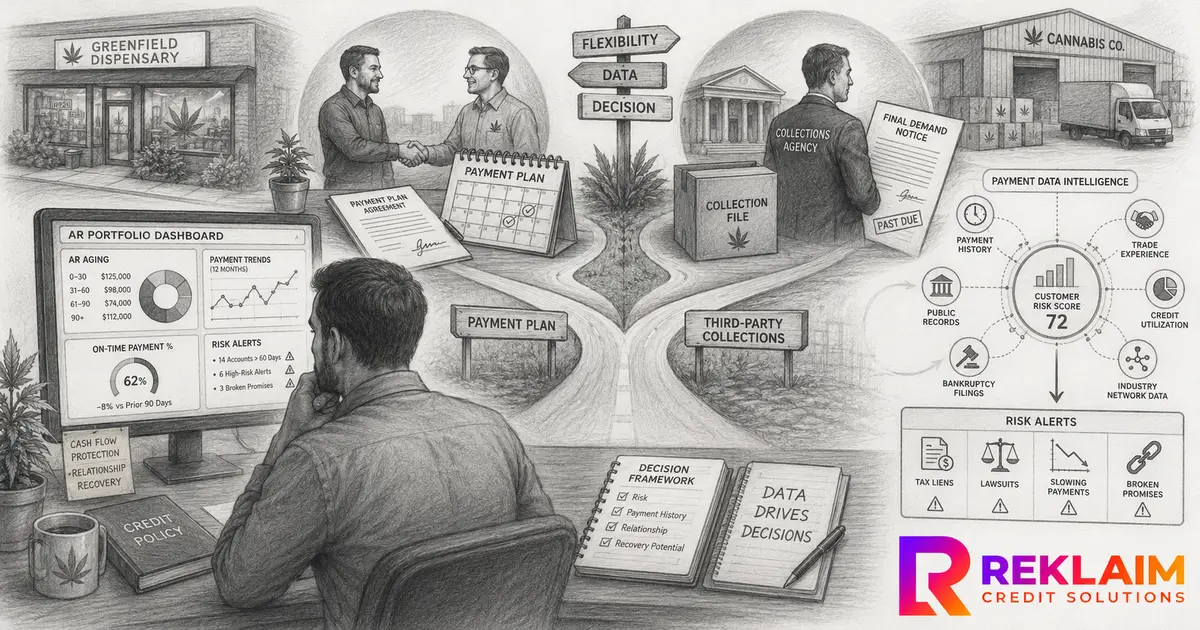
Read More: Cannabis Accounts Receivable: When to Use Payment Plans vs. Third-Party Collections
Why 60 Days Is a Backstop, Not an Early-Warning System
Consider a supplier that sells to a dispensary on Net 30 terms.
An invoice comes due 30 days after delivery. The customer does not pay.
Another 30 days pass.
The account now reaches the 60-day threshold under the Massachusetts rule.
From a credit manager’s perspective, that customer did not suddenly become risky on day 60. The invoice has already been 30 days beyond the agreed payment terms.
What happened during those 30 days matters.
- Did the supplier continue shipping?
- Did the buyer place larger orders?
- Did another invoice come due?
- Did the customer’s payment pattern start slowing across other suppliers?
- Did a tax lien, lawsuit or other credit event appear?
A supplier that waits for the statutory delinquency trigger may discover the problem only after several invoices have accumulated.
That distinction matters because credit losses rarely begin with one dramatic event. In many cases, risk deteriorates in stages.
I saw that pattern repeatedly during 14 years working in commercial collections.
A company opened an account quickly. Someone performed a limited credit review. The customer paid normally for a while. Because the account had been approved, nobody reviewed it again.
Then payment slowed.
The balance grew.
Additional invoices aged.
By the time the account reached collections, the supplier was no longer trying to recover the amount it originally expected to risk. The exposure had multiplied.
The lesson was consistent across industries: approving credit is only the first credit decision.
Every additional shipment made while an unpaid balance grows is another decision.
Massachusetts Alcohol Distributors Have Worked Under a Similar System for Decades
The structure Massachusetts adopted for cannabis has a clear precedent in the state’s alcohol industry.
Massachusetts General Laws Chapter 138, Section 25 limits covered alcohol trade credit to 60 days. When a licensee fails to pay within that period, the creditor reports the delinquency and the Alcoholic Beverages Control Commission places the buyer on a delinquent list.
Once listed, the buyer cannot continue purchasing alcoholic beverages on ordinary credit. Payment must be made on or before delivery.
The similarities are hard to miss.
That does not mean cannabis and alcohol operate under identical credit conditions. They do not.
The useful lesson is narrower: a statutory delinquency system can stop suppliers from extending additional credit after serious nonpayment becomes known. It does not replace normal commercial credit work before that point.
I saw this firsthand while my company handled third-party collections for national alcohol distributors.
Those companies operated in an industry with established credit rules and delinquency procedures. They still used commercial credit information, risk scores and portfolio monitoring.
They had a reason.
A delinquency list could tell them that another creditor had already experienced a serious payment problem. It could not tell them which currently reliable customer was beginning to deteriorate.
That is the difference between confirming delinquency and managing credit risk.
What Should Cannabis Suppliers Watch Before Day 60?
No single signal proves that a customer will default. Credit management works by identifying changes, putting them in context and deciding whether the supplier’s current exposure still makes sense.
Several indicators deserve attention.
Changes in Payment Behavior
Payment behavior often changes before an account reaches formal delinquency.
A customer that historically paid around day 28 may start paying at day 35. Then day 42. Then day 50.
Each invoice eventually gets paid, so the account may still look acceptable if the supplier only asks whether invoices are open or closed.
The trend tells a different story.
A shift from consistent payment to progressively slower payment can signal pressure before an invoice reaches 60 days.
Payment behavior becomes even more useful when a supplier can see how the customer is paying other trade creditors. A business may keep one strategically important vendor current while stretching several others.
That broader pattern can reveal stress that a supplier’s own aging report cannot see.
Commercial Credit Score Changes
A credit score should not replace judgment, but a meaningful change in a customer’s score should trigger a review.
The question is not simply whether the customer has a “good” or “bad” number.
Ask what changed.
Has the customer’s risk profile deteriorated since the account was approved? Does the current credit limit still make sense? Has the supplier’s exposure increased while the underlying credit quality declined?
Credit decisions should reflect current information, not a report pulled six or twelve months ago and forgotten in a file.
Lawsuits and Judgments
A new lawsuit does not automatically mean a customer cannot pay its suppliers.
It does mean somebody on the credit team should look at the account.
Who filed the case? What is the amount? Is it an isolated commercial dispute or part of a pattern? Does it appear alongside slower payments or other signs of financial stress?
The signal becomes more useful when viewed with the rest of the customer’s credit profile.
Tax Liens
Tax problems can indicate cash-flow pressure or competing demands on available funds.
Again, context matters.
A tax lien should not automatically produce a credit denial. It should prompt a review, particularly when the customer also carries a growing open balance or has started paying more slowly.
UCC Filings
Uniform Commercial Code filings can provide useful information about secured financing relationships and claims against business assets.
A new filing does not necessarily mean trouble. Businesses borrow money for perfectly healthy reasons.
But changes in secured obligations belong in the credit picture, especially when other risk signals are moving at the same time.
Your Own Exposure
Credit teams sometimes focus so heavily on the customer’s condition that they overlook their own position.
Suppose a customer received a $15,000 credit limit when the account opened. Several months later, the supplier has $40,000 in open invoices because sales increased and exceptions became routine.
Even if the customer’s risk profile has not changed, the supplier’s risk has.
Exposure needs monitoring just as much as creditworthiness does.
Build a Credit Process Around Change, Not Just Delinquency
Cannabis suppliers do not need to treat every risk signal as a reason to stop selling.
They need a process for reviewing accounts when the facts change.
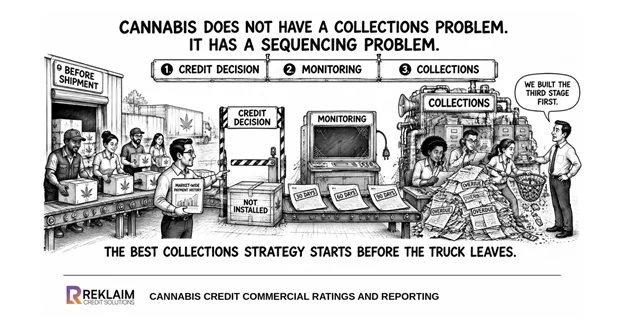
That process starts before the first shipment.
Before Extending Credit
Confirm who the business is. Review available commercial credit information and payment history. Establish payment terms and a credit limit that fit the account’s risk.
Do not treat credit approval as a box that sales needs checked before an order ships.
Decide how much exposure the company is prepared to carry if the customer stops paying tomorrow.
That number may be very different from the amount the customer wants to buy.
While the Account Is Open
Continue monitoring the account.
Watch actual payment behavior. Review meaningful changes in commercial credit information. Pay attention to public-record events. Track how much money the customer owes across all open invoices.
Most importantly, compare current behavior with previous behavior.
A company that has always paid at 45 days presents a different question from a company that historically paid at 25 days and has gradually moved to 45.
The number may be the same. The trend is not.
When Risk Changes
A new risk signal should trigger a decision, not panic.
The supplier may choose to:
- Review the account with the customer.
- Reduce the credit limit.
- Tighten payment terms.
- Hold additional shipments until part of the balance is paid.
- Require payment on delivery for new orders.
- Reduce order size.
- Escalate collection activity.
- Continue the existing terms after determining that the change does not materially affect the account.
The right response depends on the customer, the supplier’s exposure and the information available.
The point is to make that decision while options still exist.
Read More: KPI’s for Cannabis Credit
What the Massachusetts Delinquent List Can and Cannot Do
Massachusetts’ new system gives cannabis creditors useful leverage.
It also has limits.
| The Delinquent List Can | The Delinquent List Cannot |
| Identify a licensee that has reached statutory delinquency | Predict which customer is likely to deteriorate next |
| Restrict additional credit once a business is listed | Recover invoices that are already unpaid |
| Give other eligible licensees notice of validated delinquency | Show the full payment trend before the 60-day point |
| Create consequences for serious nonpayment | Determine an appropriate credit limit for each customer |
| Reduce additional exposure after listing | Replace ongoing account monitoring |
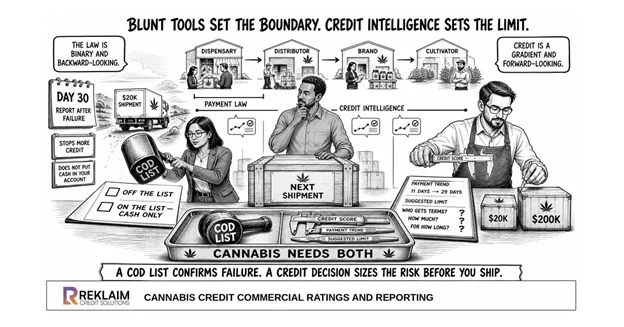
Suppliers should use the list for what it is: a regulatory backstop.
They should not mistake it for a complete credit system.
Cannabis Creditors Face Another Problem When a Customer Fails
Cannabis creditors also operate under a legal complication that most conventional trade creditors do not face.
Marijuana remains illegal under federal law. The U.S. Trustee Program has long taken the position that businesses with marijuana assets or income may face serious barriers to using federal bankruptcy proceedings when doing so would require a federal court or bankruptcy trustee to administer activity prohibited by federal law.
Bankruptcy outcomes can depend on the facts and jurisdiction, so creditors should get legal advice on a specific distressed account rather than assume a particular result.
From a credit perspective, the broader lesson is straightforward.
A supplier should not assume that a failed cannabis customer will follow the same restructuring path as a conventional business.
That makes early credit decisions more important, not less.
The best collection strategy starts before an account reaches collections.
The Best Time to Identify a Payment Problem Is Before the Customer Appears on a List
Massachusetts’ delinquency law addresses a real problem in cannabis trade credit.
Suppliers need a way to know when a licensed buyer has allowed debt to remain unpaid for 60 days. The rule creates consequences for that behavior and can prevent a listed business from continuing to accumulate ordinary trade credit throughout the market.
This is progress.
But day 60 should never be the first time a supplier learns that an account is changing.
The earlier signs often appear in payment behavior, credit data, public records and the supplier’s own growing exposure.
Reklaim Credit Solutions (a predictive cannabis credit rating agency) was built around that part of the credit cycle.
Instead of waiting for a customer to cross a delinquency threshold, companies extending credit can monitor changes in their portfolios and review accounts while they still have choices about terms, limits and future shipments.
A delinquency list tells you who has already reached the line. Credit monitoring helps you see who may be moving toward it.
This article provides general business information and does not constitute legal advice. Cannabis businesses and creditors should consult qualified counsel regarding the application of Massachusetts law to specific transactions or accounts.