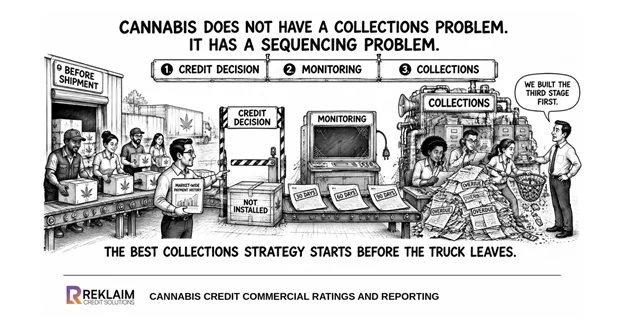


Most people think credit scoring is credit scoring. Same inputs, different branding. That assumption is wrong, and it costs businesses real $$.
Credit associations and credit rating agencies are not the same thing.
The methodologies, data volume and outputs are fundamentally different.
Here is what most people do not know.
Credit associations operate on member-reported trade payment data. In best practice associations, members submit accounts receivable aging reports: high credit extended, amount owing, slow-30, slow-60, slow-90.
The algorithm assigns weights to those buckets.
Human analysts set the weights.
The model does not learn. It does not update dynamically. Every slow-30 payer looks identical regardless of context, trajectory, or industry. Thin files get rejected or scored conservatively because there is not enough member data to work with.
The fundamental constraint is participation. The system only knows what members report. That is typically a small closed loop.
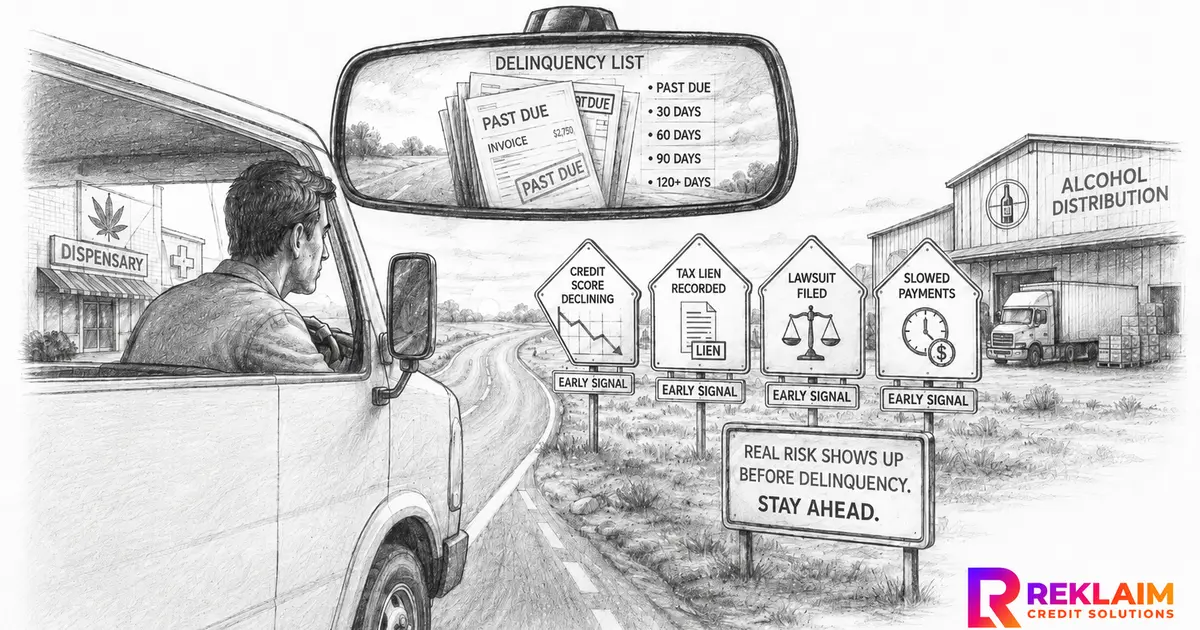
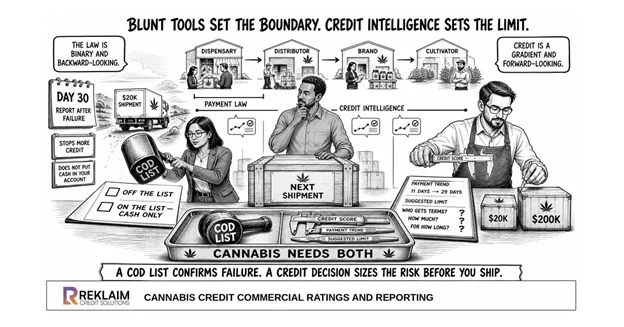
Credit associations ARE helpful, but without other PREDICTIVE rating analysis, users only know what happened in the past.
Credit rating agencies operate differently. They predict future payments reliability.
They ingest data from thousands of sources continuously: trade payment data, public records, court judgments, UCC liens, tax warrants / liens and more.
The data volume is orders of magnitude larger.
Most importantly, the data is structured for machine learning, not manual review.
Neural network ensemble models process that data in parallel. Multiple model architectures, including gradient boosting, deep neural networks, and random forests, each learn different patterns from the same underlying data. The ensemble combines those predictions.
Non-linear relationships become visible.
A company that is slow-30 but has expanding order velocity and increasing credit limits looks categorically different from a company that is slow-30 and contracting.
A weighted average treats them identically. An ensemble does not.
Volume matters here in a specific way.
Neural models learn and improve with data.
More observations, more edge cases, more industry variation, the model gets sharper.
An association rule-based system with more data just runs the same rules on a bigger pile.
The architecture determines whether scale creates value.
The practical consequence in B2B trade credit is straightforward.
Misclassify a risky buyer and you smoke the invoice.
Misclassify a creditworthy buyer and you lose the relationship.
Linear algorithms optimized for historical pattern recall will produce both errors at a rate that ensemble models simply do not.
This is not an abstract methodological debate.
In industries where traditional credit infrastructure doesn’t exist, where most buyers carry thin files and payment history is sparse, the architecture of the scoring model determines whether trade credit can flow at all.
Boring? NOPE!