
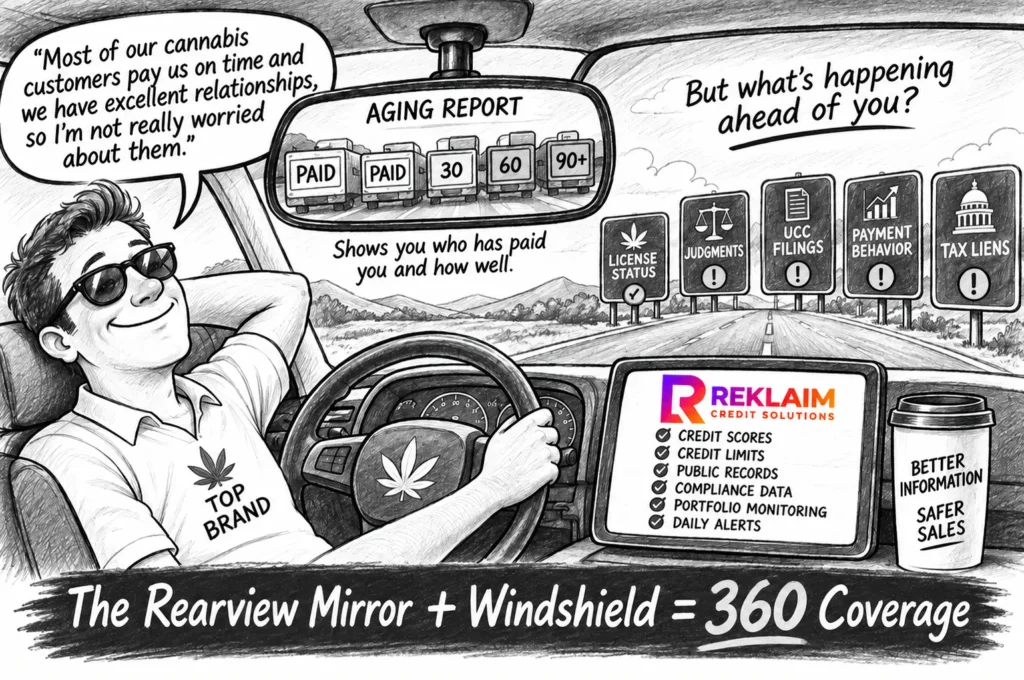
“Most of our cannabis customers pay us on time, and we have great relationships, so I’m not really worried about them.”
A leading cannabis brand told me that recently, and I understood the point. If you are a demand brand and retailers know your products move, you have leverage.
But that is not the same as knowing the customer’s credit condition has not changed.
Once you extend terms, accounts receivable becomes money your company has earned but has not collected. We monitor inventory, cash, bank balances, and sales closely, so it makes little sense to treat a large receivables portfolio as something we only review after an invoice starts aging.
That is where portfolio monitoring comes in. The question is not whether you trust your customers. The question is whether you can see a material change while you are still shipping to them.
Why Good Customers Still Need Portfolio Monitoring
If a customer has paid you on time for two years, that history absolutely belongs in the credit decision. The problem is assuming that yesterday’s history guarantees tomorrow’s payment.
A retailer can remain current with your company while its cash position changes. It may start stretching other suppliers first. A tax problem may develop. A judgment may be entered. New secured financing may appear, or a licensing issue may affect operations. None of those events automatically mean the customer will stop paying you, but each can justify another look when you have money outstanding.
This is how commercial credit has worked outside cannabis for decades. The original approval gives you a starting point, but accounts still need to be reviewed as circumstances change. The credit decision you made six months ago was based on the information available then. If the facts change, it’s fine to revisit the decision.
What Your Aging Report Tells You and What It Cannot
Most cannabis companies already have one essential monitoring tool: the accounts receivable aging report. We need it because it tells us what a customer owes, which invoices are current, which are past due, and how long those balances have been open.
What it cannot do is see outside your own ledger.
If a customer pays you on day 28 but has started paying several other suppliers on day 45 or day 50, your aging report still shows a clean account. If a tax lien appears today, the aging report does not know about it. The same is true if a license status changes or new secured debt appears.
That is the rearview-mirror problem. Your aging report shows the payment experience you have already had with the customer.
We covered that distinction in Who Is Paying Late?: aging tells you who is late with you, but it does not necessarily tell you which customer is becoming riskier before your own invoice shows the problem.
So if our aging report cannot see outside our relationship, what should we be watching?
What Should Cannabis Portfolio Monitoring Watch?
No single event tells us a good customer is about to become a bad account. Experienced credit teams look for changes, put them in context, and decide whether the account still deserves the same terms and limit it had before.
In cannabis, several changes deserve particular attention because they can affect either a customer’s ability to operate or the cash available to pay suppliers.
Changes in Payment Behavior Across Suppliers
A company that has historically paid vendors around day 30 and begins moving toward day 40 or day 50 is telling us something has changed, even if every invoice eventually gets paid.
Your own AR can only show that change once it happens to you. Shared trade-payment data can show whether payment velocity is changing across several supplier relationships. That does not mean a slower payment automatically calls for a credit hold, but it gives someone a reason to review the account before another large order ships.
This distinction matters because customers do not always slow down with every supplier at the same time. They may continue paying a critical brand within terms while stretching other vendors to preserve cash. From your ledger alone, the account can still look perfectly healthy.
Cannabis License Status
In cannabis, license status belongs in the credit file because the license is tied directly to the customer’s ability to operate. If a retailer or distributor has a material license problem, that can affect its ability to sell product and generate the cash used to pay suppliers.
A lapse, suspension, or other regulatory change does not predict the outcome of an invoice by itself. It is simply information I would want if we were carrying a meaningful open balance.
This is one reason cannabis portfolio monitoring needs industry-specific information. A generic commercial report may tell us plenty about the company, but regulatory status carries a different weight when the customer cannot legally operate without its cannabis license.
Reklaim discusses this broader issue in The Fourth C of Credit – Conditions, where changes outside the customer’s day-to-day operation can still affect its ability to pay.
Tax Liens, Judgments, and UCC Filings
Public records also need context. A tax lien can point to financial pressure. A judgment may create another claim on cash. A UCC filing may simply show that the company obtained financing.
None of those items should become an automatic stop-ship rule. If slower payments, a new judgment, and additional secured debt all appear around the same time, I want the credit team to see that before the next shipment leaves.
That is the purpose of monitoring. We are not turning every filing into a crisis; we are making sure material changes do not stay invisible until our invoice goes past due.
Why Early Warning Matters Even When Your Brand Has Leverage
Strong brands often make a reasonable argument: “Retailers need our product, so they pay us.” Demand does influence payment priority, and a retailer knows it may lose a fast-moving product if it stops paying the supplier.
But large consumer brands with enormous demand still manage receivable risk.
PepsiCo is a useful example because its products have the kind of shelf demand everyone understands. In its 2025 annual report, PepsiCo says U.S. credit terms generally require payment within 30 days.
It also says the company estimates expected credit losses using past-due experience, receivable aging, customer data, forward-looking information, estimates of creditworthiness, and projections of default and recovery rates.
The lesson is not that a cannabis brand should copy PepsiCo’s accounting process. It is that product demand and credit discipline can exist together.
The math behind a write-off makes that important. If you write off a $20,000 receivable and your profit margin is 10%, you need another $200,000 in sales at that same margin just to earn back the $20,000 you lost.
When we look at the loss that way, monitoring stops looking like another administrative task for the finance team. It becomes part of protecting the margin the sales team worked to create.
What Portfolio Monitoring Changes Before the Next Shipment
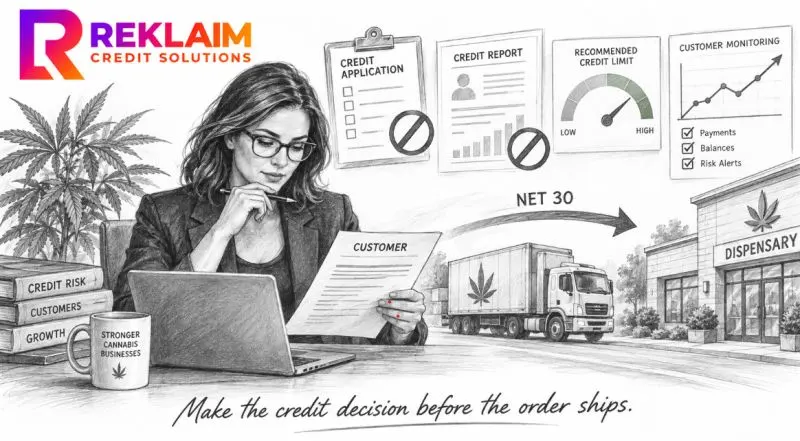
When monitoring identifies a change, the right response is not always to stop shipping. An alert should trigger a review, not a reflex.
We may call the customer and ask what is happening. We may decide the current credit limit still makes sense, ask for part of the balance before the next order ships, shorten terms, reduce the limit, or leave everything unchanged after reviewing the facts.
That fits the broader credit sequence we discussed in Cannabis Credit Risk: Why the Industry Has a Sequencing Problem. We make the initial credit decision before shipment, monitor while exposure remains open, and move into collections only after payment breaks down.
Monitoring is the middle step that often gets missed. A customer gets approved, pays well, develops a strong relationship with the supplier, and gradually becomes an account nobody thinks they need to review.
That approach works until something changes.
If we can see the change before the next shipment, we still have choices. If we find out because our invoice is suddenly 45 or 60 days late, some of those choices have already disappeared.
Your Aging Report and Portfolio Monitoring Should Work Together
Portfolio monitoring should not replace an aging report. We need both because they answer different questions.
Your aging report tells you what is happening with the money customers already owe you. Portfolio monitoring tells you what may be changing around those customers while that money is still outstanding.
Reklaim Credit Solutions is built around that distinction. Its portfolio monitoring combines cannabis-specific payment behavior with license information, score movement, public records, tax liens, UCC filings, legal events, and other account changes. Reklaim also surfaces alerts when new information appears across accounts being monitored.
The goal is not to distrust customers who have paid well for years. Good payment history should count for something. The goal is to ensure that when a good customer’s circumstances change, you do not have to wait for your own aging report to tell you after the change has already reached your invoice.
Frequently Asked Questions
What is cannabis Portfolio monitoring?
Cannabis Portfolio monitoring is the ongoing review of customers after credit has been approved. It can include changes in trade-payment behavior, credit scores, public records, tax liens, UCC filings, legal events, and license status so a supplier can review material changes while exposure remains open.
Why isn’t an AR aging report enough?
An aging report only reflects the invoices between your company and that customer. It cannot show whether payment behavior is changing with other suppliers or whether a new legal, tax, credit, or licensing event has occurred outside your AR.
What should cannabis suppliers monitor?
Useful signals include payment behavior across suppliers, credit-score movement, tax liens, judgments, UCC filings, license-status changes, and other material changes in the customer’s credit profile. None should be treated as an automatic stop-ship signal; they give the credit team a reason to review the account.
How often should customers be monitored?
That depends on the size and risk of the account. Where automated monitoring is available, alerts can surface material changes as they occur, while formal reviews can still follow the company’s normal credit policy.